
Installing an outdoor drainage system sounds hard, but it does not have to be. With a clear plan, the right tools, and a steady pace, a homeowner can handle many basic drainage projects. The key is to understand how water moves across your yard and how to give it a safe path away from the house. In this blog, you will learn how to plan the layout, set the slope, choose pipe and gravel, dig the trench, and test the system. We will also cover simple technical tips so you do not damage utilities or your foundation. By the end, you will see each step clearly and know when to do the work yourself and when to call a professional.
Follow Safety And Local Rules
Call your utility marking service before you dig. A struck gas or electric line can be life-threatening, and repairs can cost more than the project. Then check local rules for runoff discharge; many areas don’t allow draining onto a neighbor’s lot or into the street.
- Keep drains away from septic fields and wells
- Confirm if a permit is required for trenching
- Ask about the minimum setback from property lines
After the lines are marked, take photos so you remember where they run, and don’t trench until markings are done. If you’re unsure, bring your sketch to the building office or a contractor. A quick check now can prevent expensive rework later.
Choose Your Drainage Design
Match the system to the problem, not just the easiest dig. Surface flooding calls for collection points, while soggy soil often needs a subsurface route. You can combine parts, such as catch basins feeding a pipe that ends at daylight.
- French drain: gravel trench with perforated pipe
- Catch basin: a box that collects water at a low spot
- Channel drain: long grate for driveways and patios
A common residential main line is 4 inches in diameter, but larger roof areas or steep driveways may justify 6 inches. When in doubt, plan extra cleanouts so you can flush the line if the flow slows during storm season.
Tools And Materials Checklist
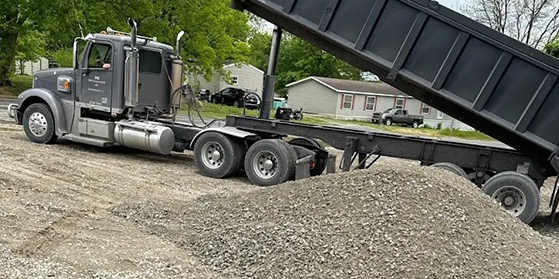
Good materials reduce clogs and callbacks. Use pipe and fittings designed for burial, and choose washed stone so fines don’t pack around the pipe. Set everything out before digging so you don’t leave trenches open overnight.
- Trenching spade, shovel, wheelbarrow, and rake
- String line, stakes, line level, and tape measure
- Non-woven fabric, 3/4-inch washed gravel, and pipe
For pipe, many homeowners use PVC SDR-35 for solid runs and quality corrugated or PVC for perforated sections. A hand saw, gloves, and a mallet help with clean cuts and tight fits. Include downspout adapters, basin grates, and a pop-up emitter or outlet guard so the final connections stay secure and easy to inspect.
Excavate Trenches And Basins
Dig the trench along your marks, keeping the bottom smooth so the slope doesn’t change. For many yards, an 8 to 12-inch trench width works well because it leaves room for gravel around a 4-inch pipe. Set catch basins so the rim is flush with finished grade and the pipe outlet matches your slope line.
- Remove roots and sharp rocks from the trench
- Pile sod separately for cleaner patching
- Compact soft spots with a hand tamper
If the trench walls crumble, widen slightly rather than fighting it. Stable sides help you place fabric and gravel without soil falling in and mixing with the stone.
Fabric And Stone Filter Layer
Line the trench with non-woven geotextile fabric to keep soil from migrating into the gravel. Think of it as a filter that lets water through while holding back silt. Add a gravel base layer, usually 2 to 3 inches, and level it to your slope.
- Use washed stone, not pea gravel.
- Overlap fabric seams by about 6 inches
- Keep the fabric tall enough to wrap over the top later
This layer matters because most drain failures come from sediment buildup. With fabric and clean gravel, water can move through void spaces instead of carrying soil into the pipe, which helps the system stay open for years.
Install Pipe And Inlets
Place a perforated pipe where you want water to enter, and a solid pipe where you’re moving water to an outlet. Many installers set perforations down in the gravel bed so water can rise and enter, while heavier particles settle lower in the stone. Connect fittings tightly and keep turns gentle to reduce resistance.
- Add a cleanout tee near the high end
- Use wyes for branches, not hard tees
- Strap downspout adapters so they don’t separate
Set basin inlets with gravel under and around them so they stay level. Before covering anything, pour water into each inlet and confirm it flows through the line without pooling.
Create Outlet And Backfill
A drain is only as good as its discharge. If you can, “daylight” the pipe on a downslope where water can flow out freely. If not, a pop-up emitter can release water at the surface, or a dry well can store it and let it soak into the surrounding soil.
- Keep outlets at least 10 feet from foundations
- Add a rodent screen on open pipe ends
- Protect the outlet area with riprap stone
Once the outlet is set, cover the pipe with gravel so you have 2 to 4 inches above it, wrap the fabric over the top, then backfill soil in layers to limit settling.
Final Testing And Upkeep
After backfilling, run a hose into the inlet for 10 to 15 minutes and watch the outlet. You want a steady flow and no bubbling at joints or basins. For the first month, check the area after heavy rains and top off the soil where it settles. Most systems last 20 to 30 years when kept clear. If water starts backing up, it’s a clogged grate or a low spot that needs filling. If you’d rather have a crew design and install a drainage solution that fits your property, contact Smith Excavating LLC.